

Start with the week you want
Most learners arrive with one goal in mind, then discover the timetable matters just as much. Before comparing cities or prices, decide how you want to spend your mornings and afternoons — how many contact hours per week, whether you study full-time or alongside work, and how much self-study you can realistically hold.
From there, a study pathway becomes easy to pick, and the city question answers itself once you know whether you want a large cohort with many levels running at once, or a smaller school where you know everybody by the end of the first week.
Compare course formats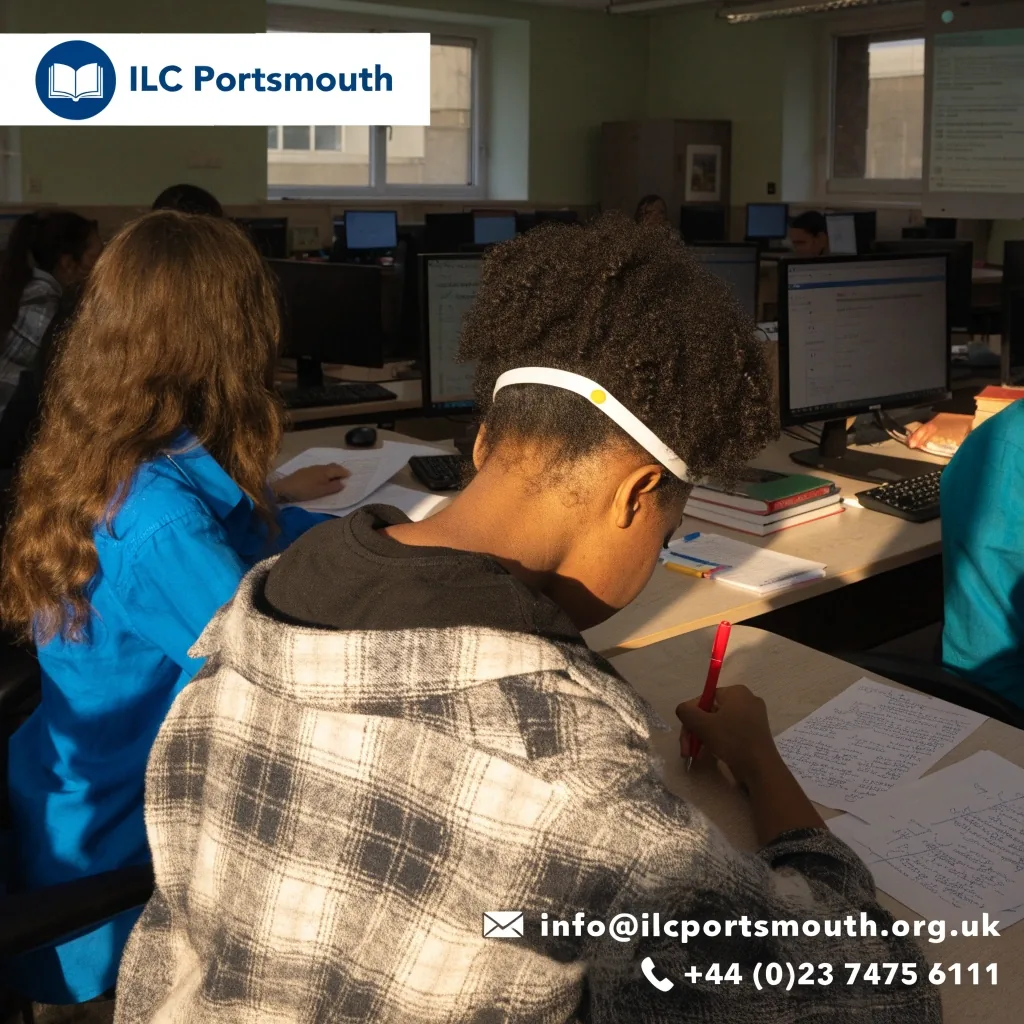
Contact hours, not slogans
Ask how many hours are taught in a group, how many are guided self-study, and how many students share a class. Those three numbers shape your progress more than any brochure photograph.
Terms you can hold
Short intensive blocks suit visitors who need a fast lift before an exam or a move abroad. Longer part-time terms suit people already living and working in the UK.
Study pathways
Which English course is actually for your goal
General English builds everyday fluency. Business English sharpens the language you need at work — meetings, writing, negotiation. Exam preparation targets a specific test format and a target band. Choose by the outcome you need, then check the level and the weekly rhythm support that outcome.
General English
Everyday fluency, four skills, steady weekly rhythm. The usual starting point for a first course in the UK.
See format and levelsBusiness English
Meetings, written correspondence, presenting, negotiation. For learners who already work in English or plan to.
See format and levelsExam preparation
Focused work on one test format, timed practice, feedback on all four papers. Useful when a specific score is needed.
See exam prepLevels are checked on arrival at most schools, and a placement conversation usually matters more than a certificate from another country. If you are unsure where you sit, ask for a short assessment before you book — it costs nothing and prevents weeks spent in the wrong class.

Choosing a city, not just a school
Your city shapes how much English you hear outside the classroom. London gives you the widest choice of levels and start dates, plus everything from theatre to weekend markets. Manchester, Bristol, Edinburgh and Portsmouth each offer quieter streets, cheaper accommodation and smaller, more consistent class sizes.
Think about the commute to class, the cost of a shared flat, and whether you want a big-cohort international crowd or a classroom where the same faces return every Monday. Both are good answers; they just lead to different cities.
- Check how many levels run each week before you book a long course.
- Ask what happens if your placement lands in the wrong class on day one.
- Compare term lengths: a shorter block can be a better first move in a new city.
Exam season
Preparing for an exam you have to sit in the UK
Exam courses are different from general English. The syllabus is fixed, the pace is steadier, and the goal is a specific band or score. That means three things matter: timed practice under real conditions, feedback on every paper — speaking, writing, listening and reading — and enough weeks to fix the habits that lose marks.
Ask the school what a typical week looks like on the course you are considering, and how often you will be given a full mock test. Many learners book six to twelve weeks around their test date, depending on their starting level and how much they study outside class.
Review exam preparation courses
What to sort out before you arrive
A little planning in the four weeks before you fly makes the first term feel calm rather than rushed.
Before booking
- Choose a course length you can commit to from start to finish — completing a block is worth more than starting two.
- Ask about the minimum level for each class and how levels are decided once you are on site.
- Read the cancellation and transfer terms before you pay a deposit, not after.
Before you travel
- Book accommodation for at least the first month; long-term housing is easier once you are here.
- Keep a printed copy of your course confirmation and accommodation address with you on arrival.
- Set up a UK SIM or eSIM before your first day so you can reach the school easily.
First week
- Expect a placement check, a tour, and a first class that feels a little fast — this is normal.
- Ask your tutor how to move class if the level turns out to be wrong. Most schools do this quietly and quickly.
- Say yes to the first social activity. It is where the part of the week outside class starts.
Not sure which course fits?
Send us your goal and your rough starting level. We will point you to the right pathway and the next available start dates.
Where the academy is
The Dress English Academy is based in Bloomsbury, central London — a quiet, walkable area between the British Museum and Bedford Square, well served by Tube and bus routes. Prospective students are welcome to visit us during working hours to talk through course options in person.
The Dress English Academy
48 Bedford Square, Bloomsbury, London, WC1B 3DP, United Kingdom
Opening hours
Monday to Friday, 9:00 AM – 6:00 PM
Saturday, 10:00 AM – 2:00 PM

Visits are by appointment so someone is free to talk through your options properly. Outside opening hours, email usually gets a reply within one working day.
Common questions
Questions learners ask most often before booking a UK English course. If yours is not here, the FAQ page goes deeper.
Read the full FAQWhich UK city is best for English language immersion?
There is no single answer. London gives you the widest range of levels and the most international classroom. Smaller cities such as Manchester, Bristol, Edinburgh or Portsmouth often mean lower rent, shorter commutes and a classroom where English is the only shared language. Match the city to your budget and your appetite for a big-city pace.
How long should a first English course in the UK be?
For most learners, four to twelve weeks is a sensible first block. Your starting level, how much you study outside class and whether you are preparing for an exam all shift the number. Booking a shorter block first keeps the option to extend open without paying for months you may not need.
Do I need a visa to study English in the UK?
Entry rules depend on your nationality, how long you plan to stay and whether the course is full-time. Short courses are often possible on a visitor route; longer study usually requires a student route. Always check the current guidance on the official UK government site before you book anything, and ask the school what documentation it can provide.
How do I know my starting level is right?
Most schools run a short placement check on your first day, covering speaking, writing and listening. That check decides your class, not a certificate you took abroad. If the placement feels wrong after the first week, ask your tutor about moving — it is a routine request and usually resolved in a day or two.
Can I work or study part-time alongside my course?
This depends on your immigration route, and the rules change. Many short-course visitors cannot work in the UK at all, while some longer student routes allow limited hours during term time. Treat work as a bonus rather than a plan, and check the official guidance for your specific situation before making commitments.
Ready to plan your English course?
Tell us your goal, your rough level and your preferred city, and we will send back the pathways that fit, the next start dates and what to prepare. Registration is handled on our contact page so we can reply to you personally rather than through an automated form.
- Course and level guidance based on your goal, not a generic list.
- Practical answers on accommodation, arrival and life in the UK.
- A real person replying from our London office during working hours.
By contacting us you agree to our handling of your details as set out in our Privacy Policy and Terms of Service.